

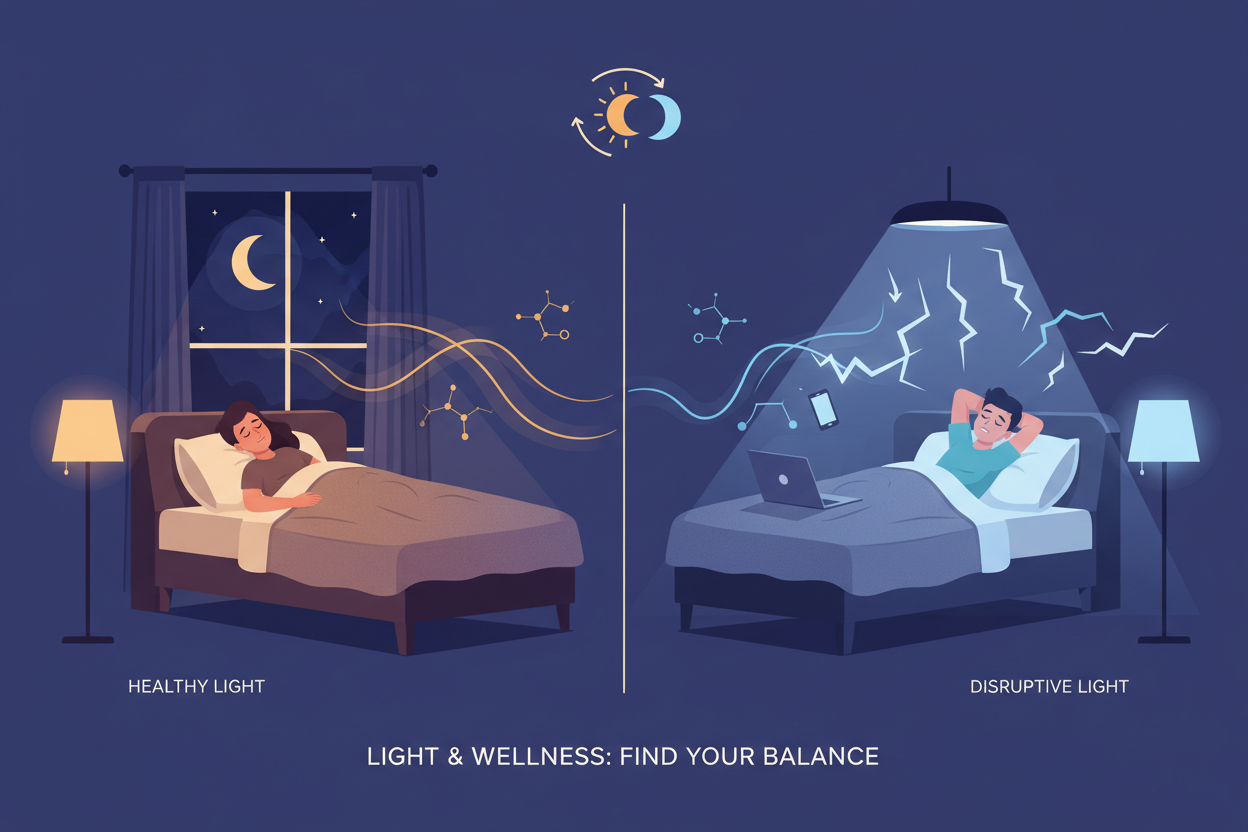
How Lighting Affects Sleep Patterns & Your Health
Light isn’t just something that helps us see — it’s one of the most powerful influences on our body’s internal clock, sleep quality, mood and overall health. In modern homes with artificial lighting and screen use, understanding how light affects your body is more important than ever.
Below we explain the science behind light and sleep, how common lighting habits can impact wellbeing, and how to make better lighting choices for better rest.
What Is the Circadian Rhythm?
Your circadian rhythm is your body’s natural 24‑hour cycle that regulates sleep‑wake patterns, hormone release and energy levels. It’s strongly influenced by light — particularly the transition between daylight and darkness.
Natural daylight tells your brain it’s time to be awake, while darkness tells your brain it’s time to produce melatonin, the sleep‑promoting hormone. When this rhythm stays in sync with day and night, your body knows when to be alert and when to rest.
Disruption of this rhythm — especially from light exposure at the wrong times — can affect sleep quality, mood, metabolism and overall health.

How Light Affects Sleep
Light and Melatonin
Exposure to light — particularly in the evening — suppresses the production of melatonin, making it harder to fall asleep and stay asleep. Even ordinary room lighting can interfere with melatonin signalling.
Artificial light at night tricks your brain into thinking it’s still daytime, delaying the onset of sleep and shortening deep, restorative sleep cycles.
Blue Light Matters Most
Light with shorter wavelengths — especially blue light emitted by screens and many LED lights — has the strongest impact on your circadian clock. This type of light suppresses melatonin more than warmer tones.
That means using bright, cool‑toned indoor lights, smartphones, tablets and TVs before bed can make it significantly harder to fall asleep.
Health Consequences of Poor Sleep from Light
Disrupted sleep isn’t just about feeling tired — it’s linked to broader health concerns:
Mental Health & Mood
Light exposure at night can be linked to poor sleep quality and may contribute to mood disorders like anxiety or depression.
Metabolic and Cardiovascular Health
Irregular circadian rhythms have been associated with metabolic issues, weight gain, diabetes and cardiovascular problems in long‑term research.
Fragmented Sleep Cycles
Bright lighting before or during sleep can reduce time spent in deep and REM sleep — stages that are crucial for memory, cognition and physical recovery.
While individual responses can vary, these trends are supported by modern sleep science and real‑world studies.
Light Throughout the Day: Tips for Better Sleep
Here are practical lighting strategies that support your circadian rhythm and sleep quality:
Morning Light
Start your day with bright natural light. Morning sunlight — even on cloudy days — signals your body that it’s daytime, helping set your internal clock.
Evening Lighting
- Use warm, dim light after sunset to avoid suppressing melatonin.
- Choose lamps and globes with warm colour temperatures (e.g., 2200–3000K).
- Avoid bright overhead LEDs or bright screens at least 1–2 hours before bed.
Night‑Time Darkness
Even low levels of bedroom light can affect sleep quality. Aim for as close to darkness as possible when you’re ready to sleep — light from street lamps or electronics through curtains can still disrupt melatonin rhythms.
Tip: Blackout curtains or low‑glow red/amber night lights can help maintain a healthier sleep environment.
Lighting Choices That Support Sleep
Modern lighting technology now includes options that help your body adjust to natural rhythms:
- Warm‑tone LED globes for evening use
- Dimmable lights to reduce intensity as night approaches
- Smart lighting systems that shift colour temperatures throughout the day
- Task lighting instead of bright ambient lights late at night
These make it easier to wind down and relax without creating a harsh light environment that interferes with sleep.


