

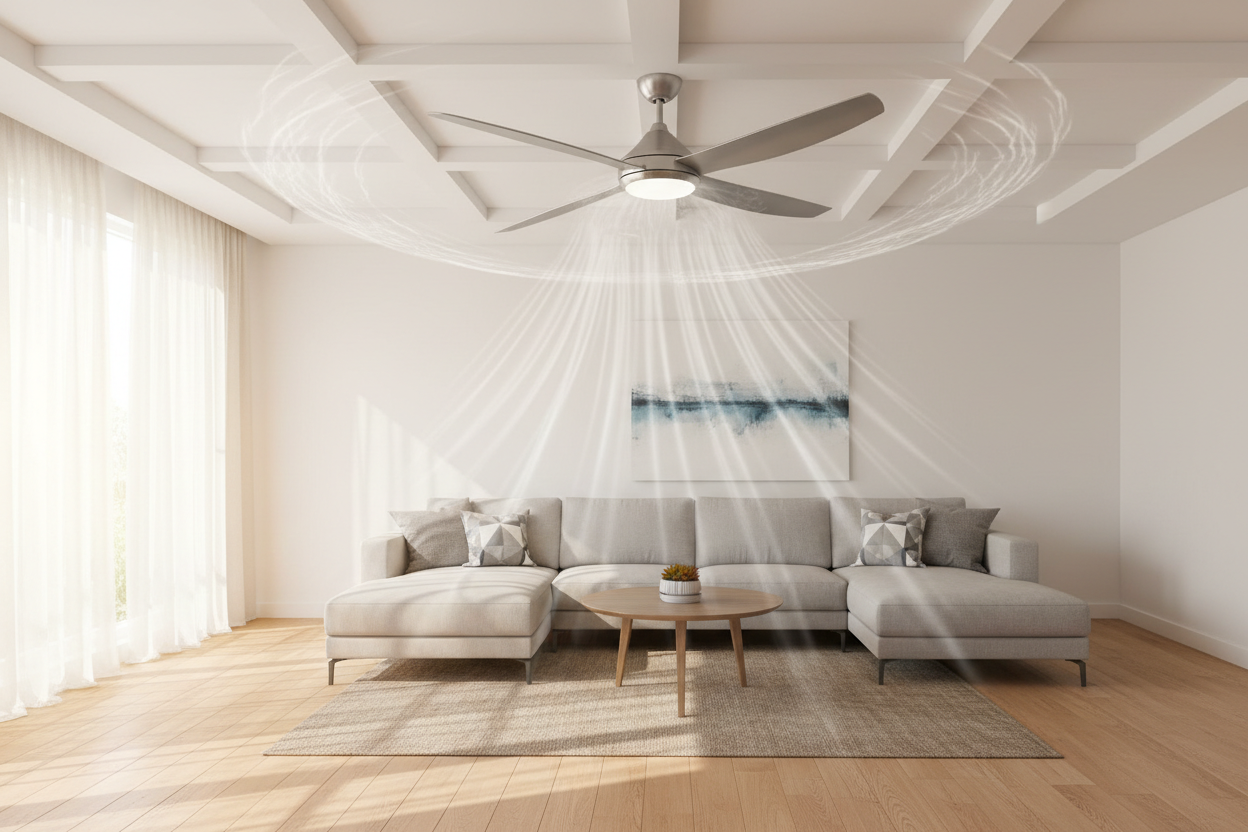
Beat the Aussie Heat: How to Choose the Right Ceiling Fan
When the temperature rises, a quality ceiling fan can make all the difference — circulating air, improving comfort, and reducing reliance on air conditioning. But with so many sizes, features, and motor types available, choosing the right fan can feel overwhelming. This guide simplifies the decision, helping you pick a ceiling fan that will keep your space cool, stylish, and energy-efficient.
Why Choose a Ceiling Fan in Australia?
Australia’s climate ranges from humid tropical to dry heat and temperate zones. Ceiling fans offer:
- Continuous airflow to keep you comfortable
- Lower energy use compared with air conditioners
- Style and lighting integration in living spaces
- Year-round comfort (with reverse airflow in cool months)
Ceiling fans aren’t just summer appliances — they help with air circulation and comfort all year.
Key Factors When Choosing a Ceiling Fan
1. Fan Size & Room Coverage
Choosing the correct fan size ensures proper airflow for the room:
| Room Size | Fan Blade Span |
|---|---|
| Up to 10 m² | 900–1050 mm (36–42″) |
| 10–20 m² | 1200–1400 mm (48–56″) |
| 20–30 m² | 1400–1600 mm (56–64″) |
| Over 30 m² | Consider dual fans or larger diameters |
Large rooms need broader blade spans to push more air efficiently, while smaller spaces look better and perform better with compact fans.
2. AC vs DC Motor
Your fan’s motor affects performance, energy use, and noise.
- AC (Alternating Current): Traditional, reliable, typically lower upfront cost
- DC (Direct Current): More efficient, quieter operation, more speed settings, lighter motor
If energy savings and quieter running matter, a DC motor fan is often worth the investment.
3. Blade Material & Number of Blades
Blade Materials
- ABS: Lightweight, moisture-resistant, durable — good for most areas
- Timber/Wood: Aesthetic appeal, quieter feel, less suited to humidity
- Metal: Strong airflow, ideal for modern or industrial spaces
Blade Count
- 3 blades: Modern look, efficient airflow
- 4–5 blades: Balanced performance and quieter operation
- 6 blades: Smoother airflow, gentle distribution
Blade count affects airflow quality, motor workload, and style — but motor performance and blade pitch are often more important than blade count alone.
4. Lighting Options
Ceiling fans with integrated LED lighting are convenient in living rooms, bedrooms, and kitchens. Look for:
- Warm white light (2700–3000K) for relaxing spaces
- Cool white light (4000–5000K) for functional areas
- Dimmable LEDs for adjustable ambience
Check whether the light is included or sold separately as an LED Light Kit.
5. Installation Height & Mounting Options
For the best airflow and safety:
- Install fans 2.1 m (7 ft) above floor level or higher
- Use downrods in high ceilings to position the fan at the optimal height
- Flush mounts work in low ceilings
Proper clearance improves airflow and avoids head impacts.
Extra Features to Consider
Remote Controls
Wireless remotes are ideal if wall wiring is difficult, and allow easy speed and light adjustments.
Reverse Mode
Use reverse airflow in winter to distribute warm air trapped near the ceiling — improving comfort and efficiency.
Smart Connectivity
Some ceiling fans integrate with smart home systems (Google Home, Alexa) for voice control and schedules.
Energy Efficiency
Look for low power consumption, quiet motors, and high airflow (CFM) ratings for better cooling with lower running costs.
Tips for Peak Performance in Australia
✔ Choose a fan with high CFM for hot, humid climates
✔ Prioritise DC motors if noise reduction and efficiency matter
✔ Match design to room function — stylish fans improve aesthetics too
✔ Use fan reverse mode in cooler months for year-round comfort


