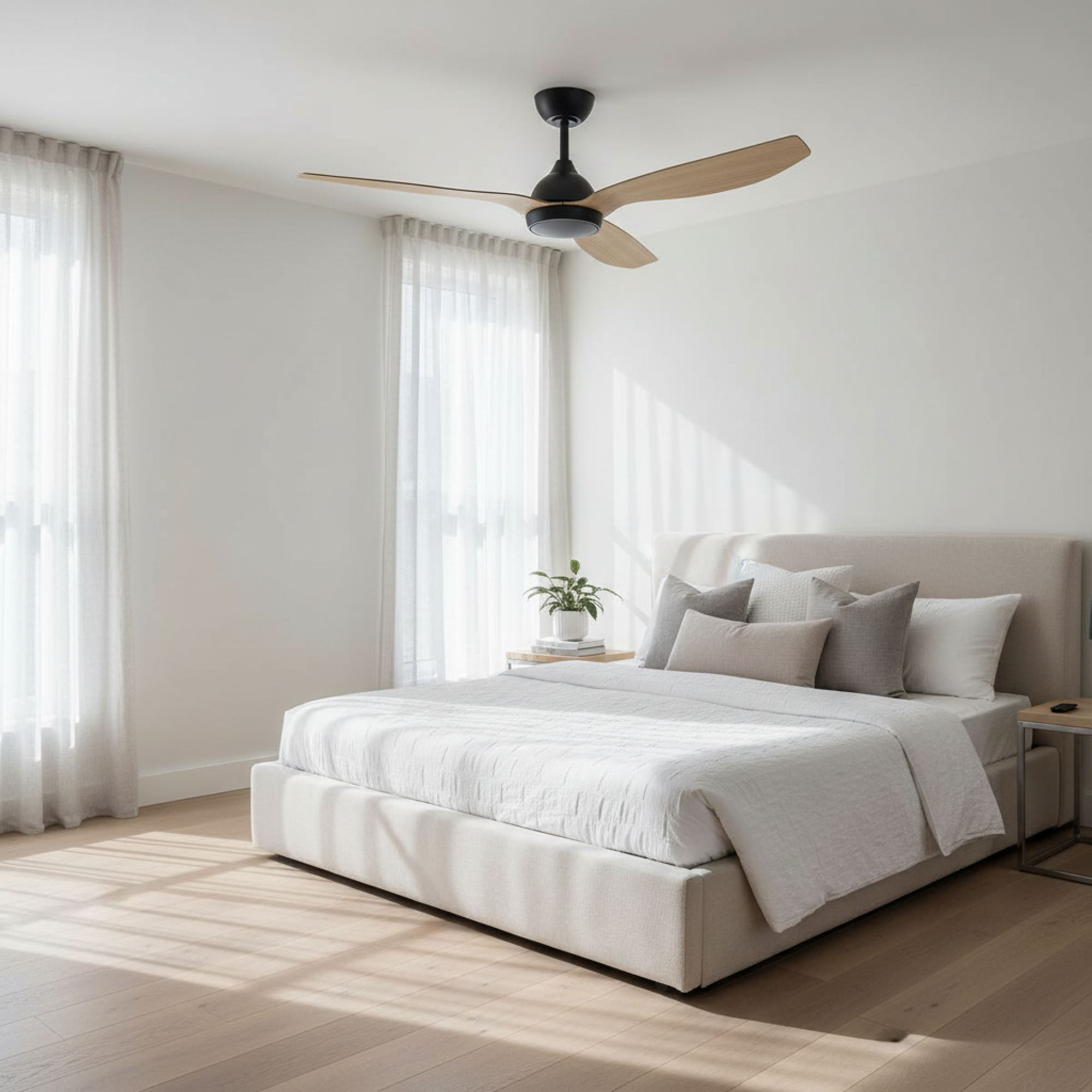
Ceiling Fans
Shop 260+ ceiling fans for bedrooms, living rooms, kitchens, patios and alfresco areas. JD Lighting stocks AC and DC ceiling fans from leading brands including Martec, Mercator, Eglo, Brilliant Lighting, Ventair and ThreeSixty Fans. Choose from fans with integrated lights, remote controls, smart features and outdoor-rated designs, with Australia-wide delivery available.
Browse by type: DC Ceiling Fans · AC Ceiling Fans · Fans with Light · Fans without Light · Remote-Control Fans · Smart Fans · Outdoor Fans · Low-Profile Fans · Fan Accessories
Read more ▾
How to choose the right ceiling fan
Ceiling fans are a practical way to improve airflow, keep rooms comfortable and reduce reliance on air conditioning during warmer months. Whether you are buying for a bedroom, living room, patio or outdoor area, the right ceiling fan depends on the room size, ceiling height, motor type, control options, lighting requirements and the style of your space.
Choose a fan for the installation area
The first thing to consider is where the fan will be installed. Bedrooms often benefit from a quiet fan with smooth, gentle airflow, while living rooms and open-plan areas may need a larger blade span for better coverage.
For patios, verandahs and alfresco spaces, choose a purpose-built outdoor ceiling fan. Indoor fans should not be installed outdoors because exposure to moisture, humidity and changing weather conditions may affect their safety, performance and warranty. Always check whether the model is suitable for covered, semi-exposed or exposed outdoor areas before installation.
DC vs AC ceiling fans
DC ceiling fans are popular because they are generally quieter, more energy efficient and provide a wider choice of speed settings. This makes them a strong option for bedrooms, living areas and homes where the fan will be used frequently.
AC ceiling fans remain a reliable and often more budget-friendly choice. They are suitable for many standard residential installations and offer straightforward operation with familiar wall-control or remote-control options.
Ceiling fans with or without lights
Ceiling fans with lights work well in bedrooms, smaller living areas and rooms where one fitting needs to provide both airflow and general lighting. Many modern models include an integrated LED light, and selected fans offer adjustable colour temperature or dimming.
Ceiling fans without lights are a better fit when the room already has separate ceiling lights, LED downlights or pendant lights. A fan without an integrated light can also create a simpler, less cluttered ceiling appearance.
Compare ceiling fan types
| Ceiling fan type | Best for | Why choose it |
|---|---|---|
| DC Ceiling Fans | Bedrooms, living rooms and frequent use | Quiet operation, energy efficiency and more speed settings |
| AC Ceiling Fans | Standard home installations | Reliable performance and often a lower price point |
| Ceiling Fans with Light | Bedrooms and smaller rooms | Combines airflow and general lighting in one fitting |
| Ceiling Fans without Light | Rooms with existing lighting | Keeps the ceiling appearance simple and uncluttered |
| Ceiling Fans with Remote | Bedrooms and living areas | Convenient control without needing to use a wall switch |
| Outdoor Ceiling Fans | Patios, verandahs and alfresco areas | Designed for covered or exposed outdoor spaces, depending on the model’s rating |
| Low-Profile Ceiling Fans | Rooms with lower ceilings | Sits closer to the ceiling to provide better clearance |
| Smart Ceiling Fans | Connected and modern homes | App, scheduling and voice-control options on compatible models |
Ceiling fan control options
The control type can make a noticeable difference to everyday use. Remote-control ceiling fans are convenient for bedrooms and living spaces, allowing you to adjust the speed or light without getting up. Wall controls are simple and familiar, while smart ceiling fans may provide app control, timers, scheduling and voice-control compatibility.
Choosing the right fan size and mounting height
A fan that is too small may not circulate enough air, while an oversized fan can feel visually overpowering in a compact room. Smaller bedrooms generally suit more compact blade spans, while large living rooms and open-plan areas often require wider fans or multiple fans to distribute air effectively.
Low-profile ceiling fans sit closer to the ceiling and can provide better clearance in rooms with lower ceilings. Rooms with higher or raked ceilings may require a compatible extension rod to position the fan at an effective height. You can find extension rods, replacement controls and other compatible parts in our ceiling fan accessories collection.
Shop ceiling fans online at JD Lighting
JD Lighting offers ceiling fans Australia wide, including DC and AC models, ceiling fans with lights, remote-control fans, outdoor fans, smart fans and low-profile options. Use the collection filters to compare blade span, colour, motor type, lighting, brand and other product features before choosing a ceiling fan for your home.