

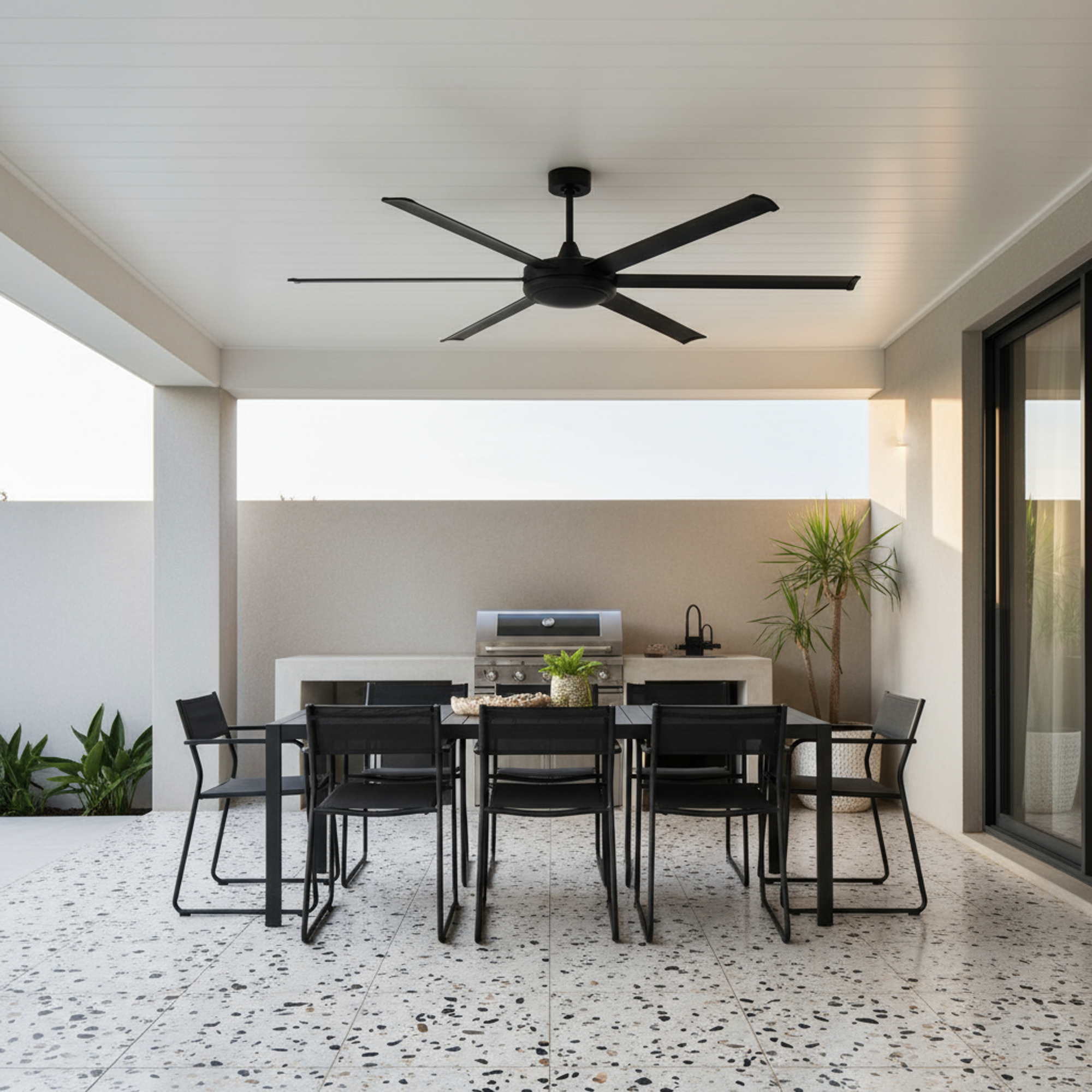
Weathering the Elements: Outdoor & Coastal Ceiling Fan Guide
Outdoor spaces are an extension of your home — and ceiling fans can make them more comfortable year-round by improving airflow, cooling on hot days, and keeping insects at bay. But not all ceiling fans are built for the outdoors or coastal environments. This guide explains what makes a great outdoor ceiling fan, which features matter most, and why coastal ceiling fans deserve special consideration.
Why Outdoor Ceiling Fans Matter
Outdoor ceiling fans do more than circulate air:
- Enhance comfort on patios, pergolas, verandahs, and alfresco areas
- Reduce perceived temperature without heavy reliance on air conditioning
- Discourage insects and improve outdoor enjoyment
- Blend lighting and design with outdoor décor
However, outdoor conditions — moisture, humidity, rain, and coastal salt air — can damage indoor fans if they’re not rated for the environment.
Understanding IP Ratings & Outdoor Use
When choosing an outdoor ceiling fan, the IP (Ingress Protection) rating is crucial. This rating tells you how well the fan resists dust and water intrusion — essential for outdoor environments.
- IP44 — Splash-resistant, ideal for covered outdoor areas
- IP54/IP55 — Dust-protected and splash-resistant
- IP65+ — Water jets resistant; best for exposed outdoor areas
Choose a fan with adequate IP protection based on whether your outdoor space is covered, semi-protected, or fully exposed.
— If your alfresco has a solid roof, IP44 is usually sufficient.
— For fully open patios exposed to rain or coastal winds, look for higher IP ratings.
What Makes Coastal Ceiling Fans Different?
Coastal environments are unforgiving — salt, humidity, and wind can corrode metal, finish, and internal components.
A true coastal ceiling fan features:
- Corrosion-resistant finishes (e.g., marine grade, powder coat)
- Stainless steel hardware
- Moisture-sealed motors
- Rust-proof blade materials (e.g., ABS or treated timber)
These features ensure longevity and performance in humid seaside climates where ordinary outdoor fans degrade quickly.
Materials & Build Quality: What to Look For
1. Blade Materials
- ABS Thermoplastic: Moisture-resistant, lightweight, ideal for humid and coastal areas
- Treated Timber/Wood: Aesthetically warm, but can be vulnerable to extreme moisture without proper treatment
- Metal: Can corrode if not coated with marine-grade finishes
Best choice for outdoor/coastal: ABS or corrosion-protected blades.
2. Housing & Motor
- Choose fans with sealed motors and protective housings
- Look for marine-grade finishes or specialised rust-proof coatings
- Brushless DC motors often handle moisture better and run quieter
Features That Matter Outdoors
Dimmable LED Lights
Integrated lighting adds function to alfresco dining or patio pathways.
Remote & Smart Controls
Wireless controls are ideal outdoors where wall switches may be inconvenient.
Reversible Motor
Reverse airflow can help distribute warm air in cooler months.
Sizing Your Outdoor Fan
| Area Size | Recommended Fan Size (Blade Span) |
|---|---|
| Small Patio (<10 m²) | 900–1050 mm |
| Medium Alfresco (10–20 m²) | 1200–1400 mm |
| Large Outdoor Room (>20 m²) | 1400–1600 mm |
Tip: Outdoor areas usually benefit from larger blade spans to push more air over open spaces.
Installation Tips
✔ Mount fans at least 2.1 m (7 ft) above floor level.
✔ For high ceilings, use appropriate downrods.
✔ Ensure wiring and electrical connections are weather protected.
✔ Consider professional installation for exposed outdoor fans.
Indoor Fans vs Outdoor/Coastal Fans — Quick Comparison
| Feature | Indoor Fans | Outdoor Fans | Coastal Fans |
|---|---|---|---|
| Water Resistance | ❌ | ✔ (IP44+) | ✔✔ (IP55+) |
| Corrosion Protection | Low | Moderate | High |
| Suitable for Covered Patio | Sometimes | Yes | Yes |
| Suitable for Exposed Area | No | IP65+ | IP65+ |
Real-World Applications
- Covered Verandahs: A standard outdoor fan with IP44+
- Semi-Open Patios: Higher IP rating if exposed to wind-driven rain
- Coastal Alfresco Areas: Marine-grade coastal fan with corrosion-resistant body and blades


