

What Is an IP Rating? Simple Facts for Lighting & Outdoor Use
When you’re shopping for lighting, ceiling fans, outdoor fixtures, or electrical equipment, you’ll often spot something called an IP rating on the product label or specifications. But what do those letters and numbers actually mean, and why should you care? This guide breaks down IP ratings in the simplest terms so you can choose the right lighting for your space with confidence.
What Does “IP” Mean?
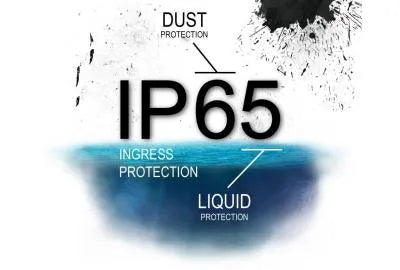
IP stands for Ingress Protection — an international standard that measures how well a device is protected against:
- Solid objects (like dust, dirt, tools or fingers) and
- Liquids (like water splashes, jets, or immersion)
The IP rating is shown as two digits following the letters “IP,” such as IP44 or IP65.
How to Read an IP Rating
An IP number has two parts:
First Digit — Solid Object Protection
- 0: No protection
- 1: Protection from large objects (e.g., hand)
- 2: Fingers or objects ≥12mm
- 3: Tools or wires ≥2.5mm
- 4: Objects ≥1mm
- 5: Dust‑protected
- 6: Dust‑tight (no dust entry)
Second Digit — Liquid Protection
- 0: No water protection
- 1: Vertical water drops
- 2: Water at a tilt
- 3: Spraying water
- 4: Water splashes from all directions
- 5: Low‑pressure water jets
- 6: High‑pressure water jets
- 7: Temporary immersion
- 8: Continuous immersion (manufacturer‑specified)

Why IP Ratings Matter for Lighting
Understanding IP ratings helps you choose lights that will last and stay safe in the environment where you plan to install them. For example:
- Indoor lights in dry areas may only need a low rating like IP20
- Bathroom lights require splash protection, often IP44 or higher
- Outdoor lights exposed to rain usually need at least IP44, IP65 or above for reliable protection against dust and water ingress
If there’s no IP rating listed, the fixture is typically intended only for indoor dry spaces.
Common IP Ratings Explained
| IP Rating | Protection Level | Typical Use Cases |
|---|---|---|
| IP20 | Protection from fingers and solids only | Indoor, dry rooms |
| IP44 | Protection from dust and splashes | Bathrooms, covered outdoor areas |
| IP54 | Dust‑protected and splash‑resistant | Semi‑outdoor spaces |
| IP65 | Dust‑tight, water jets resistant | Exposed outdoor lighting |
| IP66 | Dust‑tight, strong water jets | Harsh outdoor environments |
| IP67/IP68 | Temporary or continuous immersion | Specialized use (e.g., pool lights) |
How to Choose the Right IP Rating
For indoor lighting:
- If the light is in a dry area away from moisture, a basic IP20 rating is usually sufficient.
For bathrooms and wet areas:
- Choose IP44 or above to safely handle splashes and humidity.
For outdoor lighting:
- Go for IP65 or higher if the fixture will be exposed to rain, dust, or coastal winds.
Always check manufacturer specs and installation guidance — correct IP selection helps extend the life of your lighting and ensures safe performance.
Quick Takeaway
IP ratings are a simple but powerful way to know how well a lighting product will handle dust and water. The higher the numbers in the code, the better protected the fitting is — helping you match your lighting choice to its environment and avoid premature failure or safety issues


