

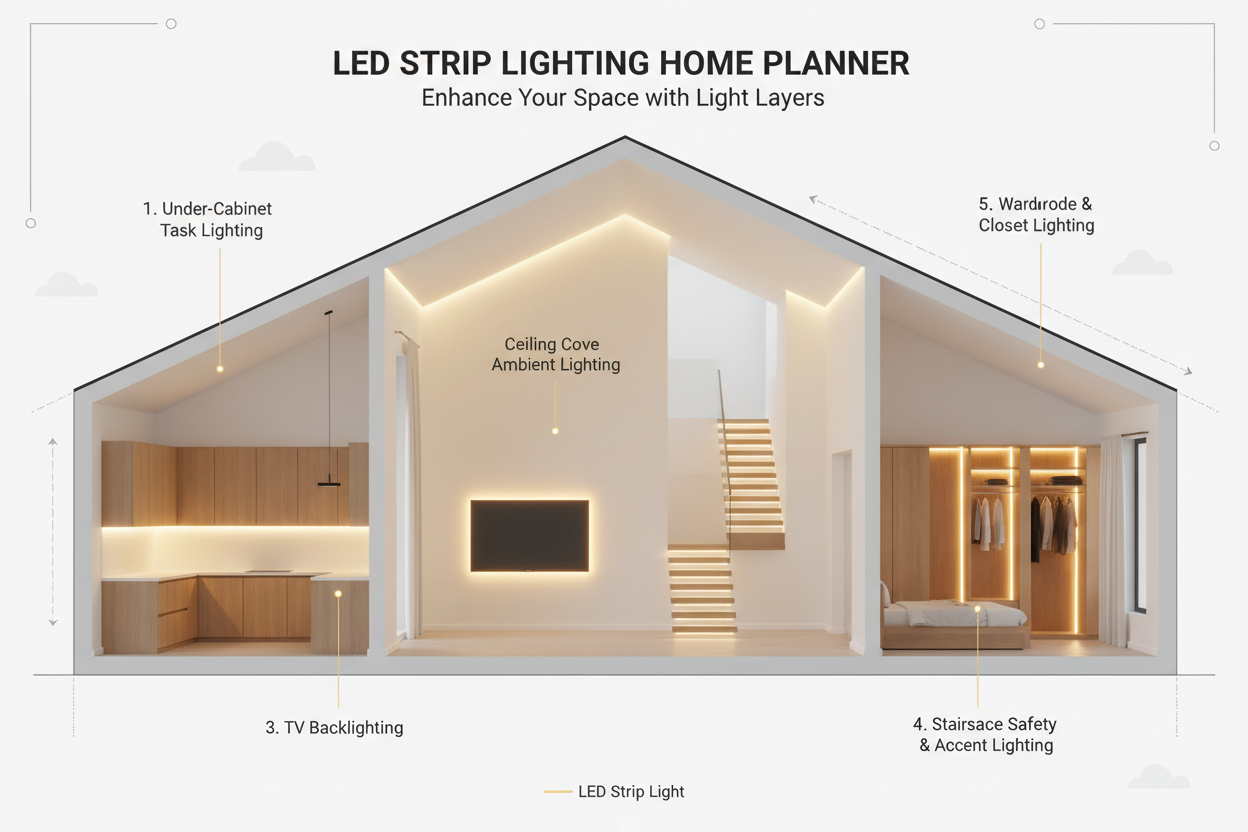
How to Plan Your LED Strip Lights for Home Lighting
LED strip lights are one of the most versatile lighting solutions for modern Australian homes. Whether you’re adding ambient mood lighting, highlighting architectural features, or lighting up task areas like kitchen benches or shelving, strip lighting can transform a space with subtle, continuous illumination.
Planning your strip light setup before you start is the key to getting the look and performance you want. In this guide, we’ll take you through the essentials — from components and placement to power and colour choices.
What You Need to Know Before You Start
At their core, LED strip lights consist of a flexible strip covered in tiny LED chips, connected to a driver and power lead, and often housed in a profile (also called extrusion). The profile both protects the strip and helps create a seamless, professional finish once installed.
Before ordering or installing your strip lights, consider these key questions:
- Do you want your strip lighting dimmable?
- What colour tones do you prefer?
- How will you control the lights — via remote, wall switch, or smart controller?
- What profile type will you use (surface mount, recessed, corner, etc.)?
- Where will you mount them (under cabinets, on shelves, in coves, etc.)?
These decisions will shape the final look and function of your strip lighting.
Choosing the Right Components
1. LED Strip Length
Measure the area you want to illuminate and calculate how many metres of strip you’ll need. Strip lights are often sold by the metre, and many models can be cut at designated points to customise the length.
2. Colour Temperature & Style
Choose a colour tone to suit the mood of the space:
- Warm white — cosy and inviting for living areas
- Neutral white — clean and balanced for kitchens and bathrooms
- Cool white / daylight — bright and crisp for work zones
- RGB/colour changing — fun, dynamic lighting for entertainment areas or accent features
3. Profiles and Mounting
LED strip profiles are available in various shapes:
- Surface-mounted profiles sit on top of surfaces
- Recessed profiles sit flush within a channel
-
Corner profiles aim light at 45° angles
Each profile type gives a different lighting effect and installation finish.
4. Dimmable Drivers & Control
If you want dimming capability, choose a dimmable driver or pair your strip with a remote control or smart controller. Remote kits can save the cost and effort of hardwiring, and give you flexibility without calling an electrician.
5. Power Supply Planning
Make sure the driver you choose can handle the total wattage of your strip lights — and leave about 20% extra capacity to avoid overloading the driver.
Common Strip Light Applications
LED strip lights are hugely adaptable. Some popular uses include:
- Under-cabinet lighting in kitchens for bright, even task light
- Shelving and display lighting to showcase objects or collections
- Cove lighting for soft indirect illumination in lounges or bedrooms
- Feature lighting around mirrors or architectural detail
Their slim, flexible design means they can be installed in tight spaces or curved areas with minimal effort.
Tips for a Great Installation
- Measure twice: Always plan lengths before cutting or ordering.
- Check IP ratings: If installing in kitchens or bathrooms, ensure the strip light you choose is suitable for occasional moisture exposure.
- Use profiles for a polished look: Profiles not only protect strips but help with heat dissipation and light diffusion.
- Plan your control method: Remote, wall switch, or app control can make all the difference in convenience.
Final Thoughts
LED strip lighting is both functional and stylish, offering endless design possibilities around your home. With careful planning — considering length, colour, control, mounting and power — you can create lighting that enhances both the ambience and usability of your spaces.
Ready to design your strip light setup? Start with your measurements and preferences, then pick the components that fit your vision. And if you need help, our team is always here to guide you.


