

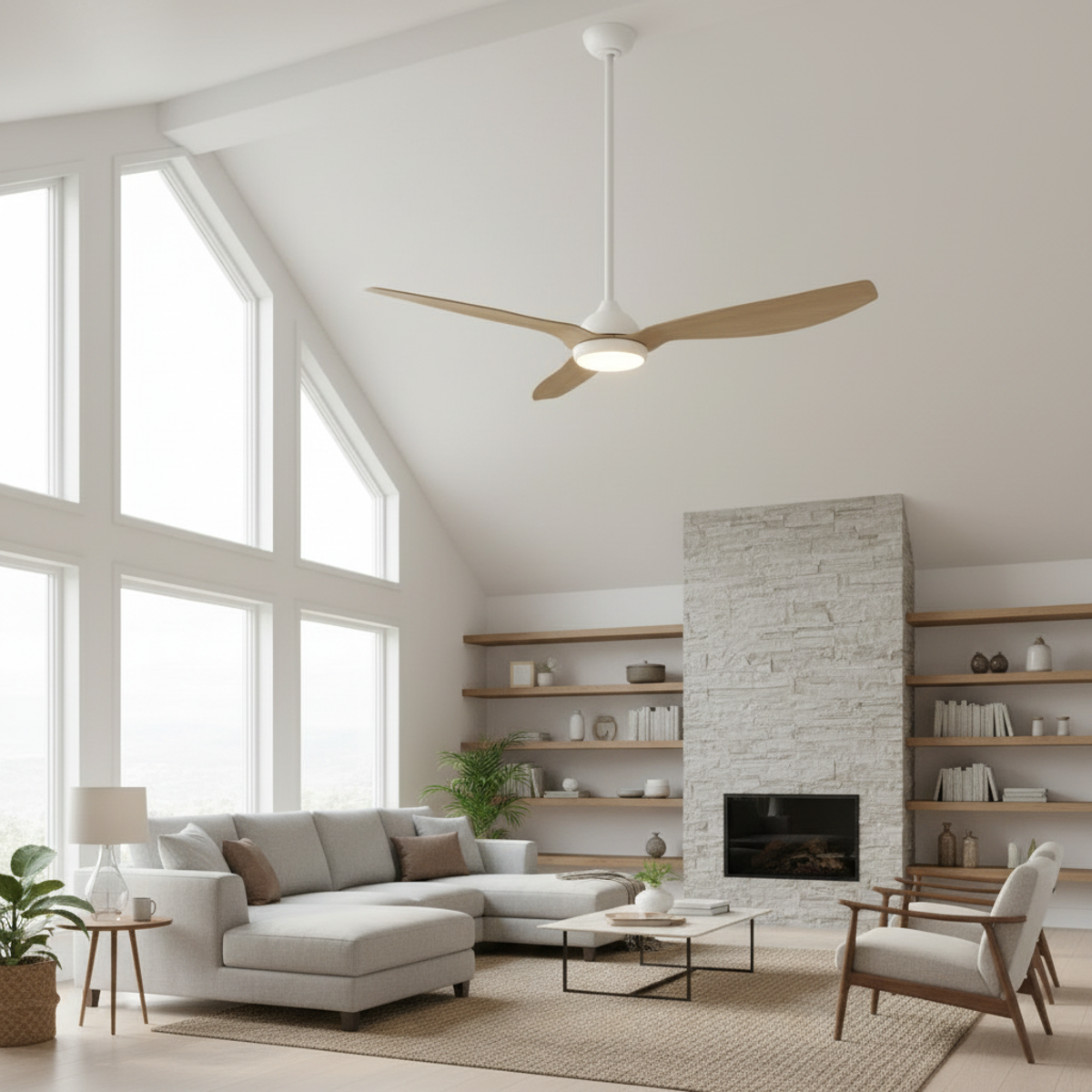
Extension Rods for Ceiling Fans — What They Are & How to Choose
When installing a ceiling fan, one of the most important decisions you’ll make is whether to use an extension rod (downrod) — and if so, how long it should be. Choosing the right rod helps ensure optimal airflow, safety, and comfort, especially in rooms with higher ceilings.
This guide explains what extension rods are, why they matter, and how to pick the right size for your space.
What Is a Ceiling Fan Extension Rod?
An extension rod (also called a downrod) is a metal tube that connects your ceiling fan’s motor housing to the ceiling bracket. It lowers the fan to the correct height — improving airflow and balance.
Extension Rods have a specific set of wires inside with connectors on each side of the rod called a 'loom'. This is why you must get the extension rod that is made for the particular model of fan.
In rooms with high or cathedral ceilings, a downrod ensures the fan blades sit at the ideal position for effective circulation.

Why Ceiling Fan Downrods Matter
Ceiling fans work best when they are positioned at the right height. Too high and they don’t circulate air well; too low and they can be unsafe.
Downrods:
✔ Improve airflow by placing the fan in the best position
✔ Help with proper balance and quiet operation
✔ Make installation easier on high ceilings
✔ Ensure safety by keeping blades clear of people and objects
How to Choose the Right Extension Rod
1. Measure Ceiling Height
The first step is to determine your ceiling height and room shape.
General guidelines:
- Ceiling height ≤ 2.7 m (9 ft): Flush mount or short downrod
- Ceiling height 2.8–3.5 m (9–11.5 ft): 100–150 mm downrod
- Ceiling height 3.6–4.2 m (12–14 ft): 300–500 mm downrod
- Ceilings > 4.2 m (14 ft): Consider 600–18000 mm
These are approximate ranges — always check the fan manufacturer’s recommendations to match blade span, airflow needs, and safety clearances.
Why Height Matters for Airflow
Ceiling fans work best when the blades are:
- 230–300 mm (9–12″) below the ceiling for optimal circulation
- Minimum 2.1 m (7 ft) above the floor to ensure safety
Downrods help position your fan in this “sweet spot” on high ceilings, ensuring cool airflow reaches where you need it most.
Downrod Sizes — Quick Reference
| Ceiling Height | Recommended Rod Length |
|---|---|
| Up to 2.7 m | Flush mount or 75–100 mm |
| 2.7–3.5 m | 100–150 mm |
| 3.5–4.2 m | 300–500 mm |
| Above 4.2 m | 600–1800 mm |
Tip: If your ceiling is angled or sloped, choose a compatible angled ceiling adapter along with the extension rod.
Types of Downrods
Standard Straight Downrod
The most common option — ideal for flat ceilings.
Angled Downrod
Used with sloped or cathedral ceilings to keep the fan level.
Installation Tips
- Always use the mounting hardware included with the fan
- Confirm the rod diameter matches the fan’s motor housing
- For ceilings over 30° slope, make sure your fan has angled ceiling compatibility
- If in doubt, get a qualified electrician to install — safety first!


