

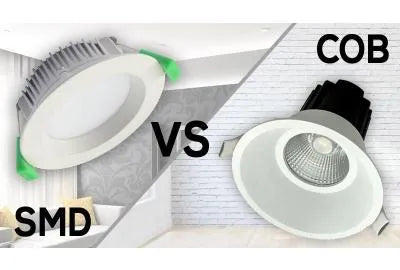
SMD vs COB Downlights — Which LED Technology is Right for You?
When choosing LED downlights, one of the key decisions is the type of LED light source used. The two most common technologies are SMD (Surface Mounted Diode) and COB (Chip on Board) — and while both deliver efficient, long‑lasting light, they behave differently in terms of beam spread, brightness quality, and best applications. This guide explains what each one is, how they work, and which is best suited to different lighting needs.
What is SMD LED Downlight?
SMD stands for Surface Mounted Diode. In SMD downlights, multiple small LED chips are mounted onto a circuit board. These individual diodes collectively emit light, which is then diffused through a reflector or frosted lens.
Key Features of SMD Downlights
- Produces a wide, even light spread ideal for general room illumination.
- High lumen output per watt, making it energy efficient.
- Often more flexible in colour temperature and tuning options.
- Typically more cost‑effective for standard home and office lighting.
Because of their broad, diffused light, SMD downlights are excellent for living areas, kitchens, bedrooms or spaces where ambient lighting is the priority.
What is COB LED Downlight?
COB stands for Chip on Board. Rather than an array of individual chips, COB downlights feature multiple LED chips mounted closely together on a single substrate, forming one strong, unified light source.
Key Features of COB Downlights
- Produces a more concentrated, focused beam with less visual “dot” effect.
- Often yields crisper, cleaner light with good colour rendering.
- Particularly effective in accent lighting, task lighting, or areas with high ceilings.
- Can deliver a smooth, single light source appearance that mimics traditional halogen downlights.
COB downlights are ideal where directed light or stronger centre illumination is needed without multiple shadows — such as hallways, feature walls, or display areas.
Side‑by‑Side Comparison
| Feature | SMD Downlights | COB Downlights |
|---|---|---|
| Light distribution | Wide, diffused illumination | Focused, concentrated beam |
| Best use | Ambient/general lighting | Accent/task lighting |
| Beam angle | Large, soft spread | Narrower, directed light |
| Energy efficiency | High lumens per watt | Slightly higher light intensity at point source |
| Cost | Generally more affordable | Usually higher due to design |
| Visual style | Smooth, wide glow | Clean, spotlight quality |
Which Should You Choose?
-
Choose SMD Downlights if you want:
✔ Even, widespread illumination for most rooms
✔ Cost‑effective general lighting
✔ Flexibility in colour temperatures or decorative lighting options -
Choose COB Downlights if you want:
✔ Focused or directional light with higher intensity
✔ A cleaner, single‑source light with reduced glare
✔ Suitable lighting for hallways, artwork, or task‑oriented spots
Both technologies are energy‑efficient and long‑lasting when properly installed, but understanding their differences helps you match the lighting solution to your space and design goals.
Quick Takeaways
- SMD technology spreads light widely and is perfect for general residential lighting.
- COB technology offers focused, high‑quality light ideal for accent or task lighting.
- Your choice should depend on the room layout, lighting purpose, and aesthetic preference.
Want To Learn More?
Explore our collection of both SMD and COB LED downlights to find the best fit for your home or commercial space — from high‑efficiency ambient lights to crisp accent fixtures.


