

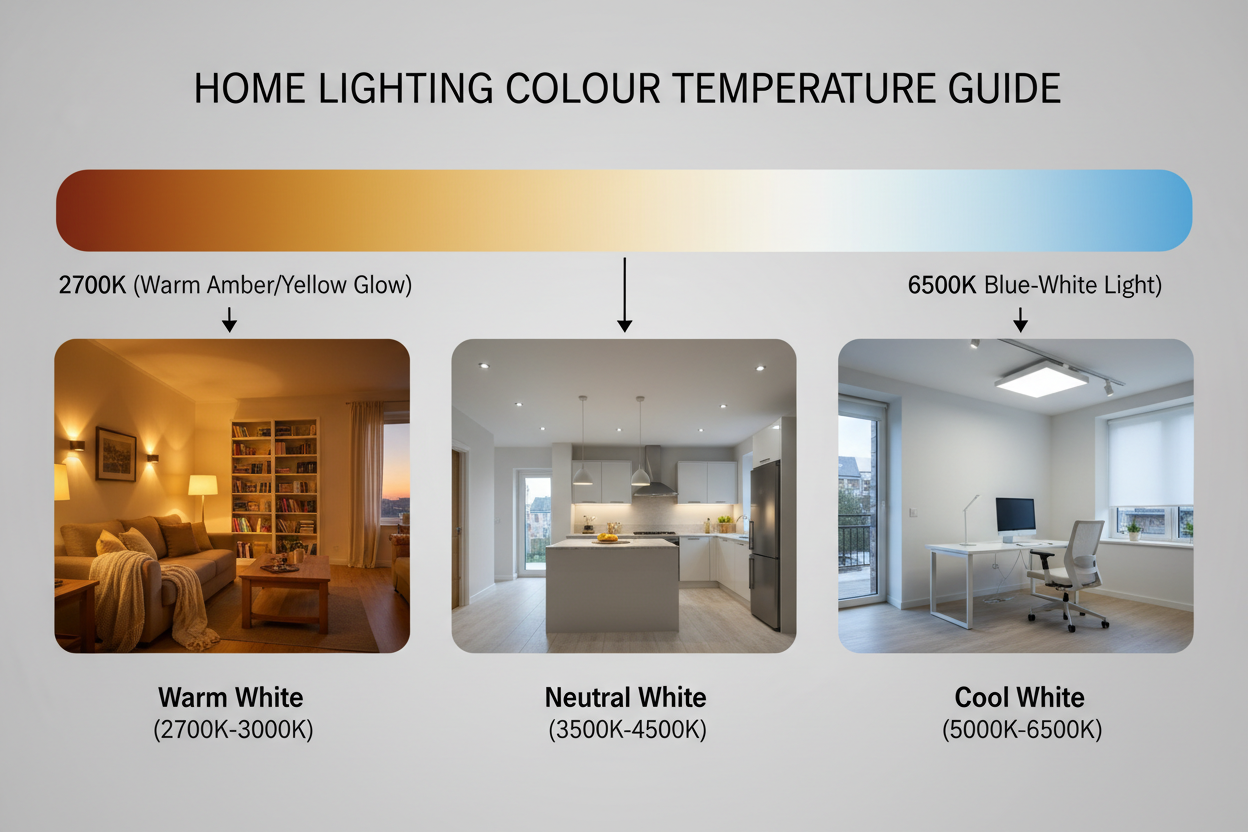
Understanding Colour Temperature in Home Lighting
When choosing lighting for your home, one of the most important — and often misunderstood — factors is colour temperature. Colour temperature affects how a space feels, how colours appear, and how comfortable a room is to use throughout the day.
Put simply, colour temperature describes whether a light appears warm, neutral or cool when switched on. While brightness determines how much light you get, colour temperature determines the mood and function of that light.
What Is Colour Temperature?
Colour temperature refers to the appearance of light, ranging from warm yellow tones through to bright white and cooler daylight tones. Choosing the right colour temperature can dramatically change the atmosphere of a room, even when using the same light fitting.
As a general rule:
- Lower colour temperatures produce warmer, softer light
- Higher colour temperatures produce cooler, crisper light
Understanding this makes it easier to select lighting that suits both the purpose of the space and the way you live in it.

Warm White Lighting
Warm white lighting creates a soft, inviting glow that feels comfortable and relaxing. It closely resembles traditional incandescent lighting and is the most popular choice for living areas in Australian homes.
Best used in:
- Living rooms
- Bedrooms
- Dining areas
- Hallways
- Outdoor entertaining spaces
Warm white lighting is ideal where comfort, ambience and relaxation are the priority.
Neutral White Lighting
Neutral white lighting offers a balanced, clean look without feeling too yellow or too stark. It provides excellent visibility while still maintaining warmth.
Best used in:
- Kitchens
- Bathrooms
- Home offices
- Studies
- Laundry areas
This colour temperature works well in areas where both comfort and clarity are important.
Cool White & Daylight Lighting
Cool white or daylight lighting appears bright and crisp, similar to natural daylight. It enhances contrast and detail, making it suitable for practical or task-focused spaces.
Best used in:
- Garages
- Workshops
- Storage areas
- Outdoor security lighting
While highly functional, cooler lighting is usually not recommended for living areas as it can feel harsh over extended periods.
Adjustable & Tri-Colour Lighting Options
Many modern LED fittings now include adjustable or tri-colour technology, allowing you to switch between warm, neutral and cool tones using a switch or controller. This flexibility is perfect for:
- Multi-purpose rooms
- Renovations where lighting preferences may change
- Homes wanting future-proof lighting choices
It’s an easy way to customise your lighting without replacing fittings.
Tips for Choosing the Right Colour Temperature
- Use warm tones for relaxing and entertaining areas
- Choose neutral tones for kitchens and work zones
- Reserve cool tones for functional or utility spaces
- Keep colour temperature consistent within each room
- Consider how natural light enters the space during the day
The right colour temperature improves comfort, functionality and the overall look of your home.
Final Thoughts
Colour temperature plays a huge role in how your home feels and functions. By choosing the right light tone for each space, you can enhance ambience, improve visibility and create a more comfortable living environment — all without changing your layout or décor.
If you’re unsure which colour temperature is right for your space, our team is always happy to help.


