

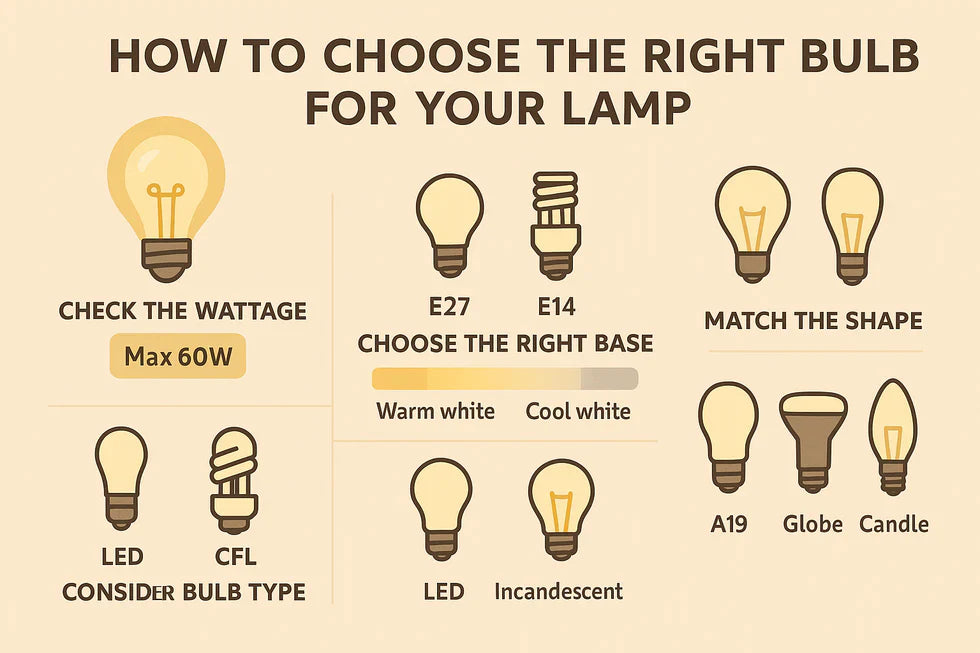
How to Choose the Right Light Globe
Buying new light globes doesn’t need to be confusing. Whether you’re replacing an old globe or upgrading to LED, choosing the right one can be broken down into four simple steps.
1. Identify the Globe Type
The first step is making sure you have the correct globe base to suit your light fitting. You can do this in a few easy ways:
- Check the base of your old globe and match it to the globe type images
- Look inside the fitting – many light fittings have a small label showing the required globe type
- Refer to the product packaging or manual, where globe details are usually listed under specifications
- Still unsure? Contact our team and we’ll be happy to help you identify the correct globe
Getting the base right ensures the globe fits safely and works as intended.
2. Choose the Right Colour Temperature
Once you know the globe type, the next decision is colour temperature. This determines how warm or cool the light appears when switched on and is measured in Kelvin (K).
- Lower Kelvin (e.g. 2700K–3000K) = warm, soft light
- Higher Kelvin (e.g. 4000K–5000K) = cooler, brighter light
Expert tip:
- Cool white is ideal for task-focused spaces like home offices, garages, laundries, and workshops
- Warm white is best for living rooms, bedrooms, and dining areas, creating a more comfortable and inviting atmosphere
Choosing the right colour temperature can make a big difference to how a space feels and functions.

3. Select the Globe Technology
There are four main globe technologies available today. Here’s a quick overview to help you choose:
LED Globes (Light Emitting Diodes)
LEDs are now the preferred choice for most Australian homes due to their performance and efficiency.
- Up to 85% more energy efficient than halogen
- Long lifespan – around 25,000 hours on average
- Run cooler and safer than older technologies
- Backed by long warranties (often 3 years)
- While LEDs cost more upfront, their energy savings and longevity make them the most cost-effective option long term.
CFL Globes (Compact Fluorescent)
CFLs were once popular for energy savings but have largely been replaced by LEDs.
- Around 70% more efficient than halogen
- Lifespan of 8,000–15,000 hours
- Generally non-dimmable
They’re still an option if you’re looking for a lower upfront cost, but LEDs outperform CFLs in almost every area.
Halogen Globes
Halogen technology is now considered outdated.
- Poor energy efficiency
- Short lifespan
- Generate a lot of heat
Most manufacturers no longer produce halogen globes, and LEDs are the recommended replacement.
Carbon Filament Globes
Carbon filament globes are designed primarily for decorative lighting.
- Classic vintage appearance
- Lower efficiency in traditional versions
To combine style with performance, LED carbon filament globes replicate the vintage look while offering excellent energy efficiency and long life — ideal for feature lighting where the globe is on display.
4. Decide on Brightness Level
The final step is choosing the right brightness. Instead of watts, brightness is measured in lumens.
- Always check the maximum wattage rating of your light fitting
- Use lumen guides to match brightness to the room’s purpose
- Lower lumens for ambient lighting
- Higher lumens for task and work areas
The right brightness ensures your space is well lit without being harsh or overpowering.

Final Thoughts
By following these four steps — globe type, colour temperature, technology, and brightness — you’ll be able to confidently choose the right light globe for any room in your home. A small change can make a big difference to comfort, efficiency, and atmosphere.
If you’re unsure at any stage, our team is always here to help.


